
🌞जीवनयात्रा - भाग १, २ आणि ३ Life Cycle — Part 1, 2 and 3
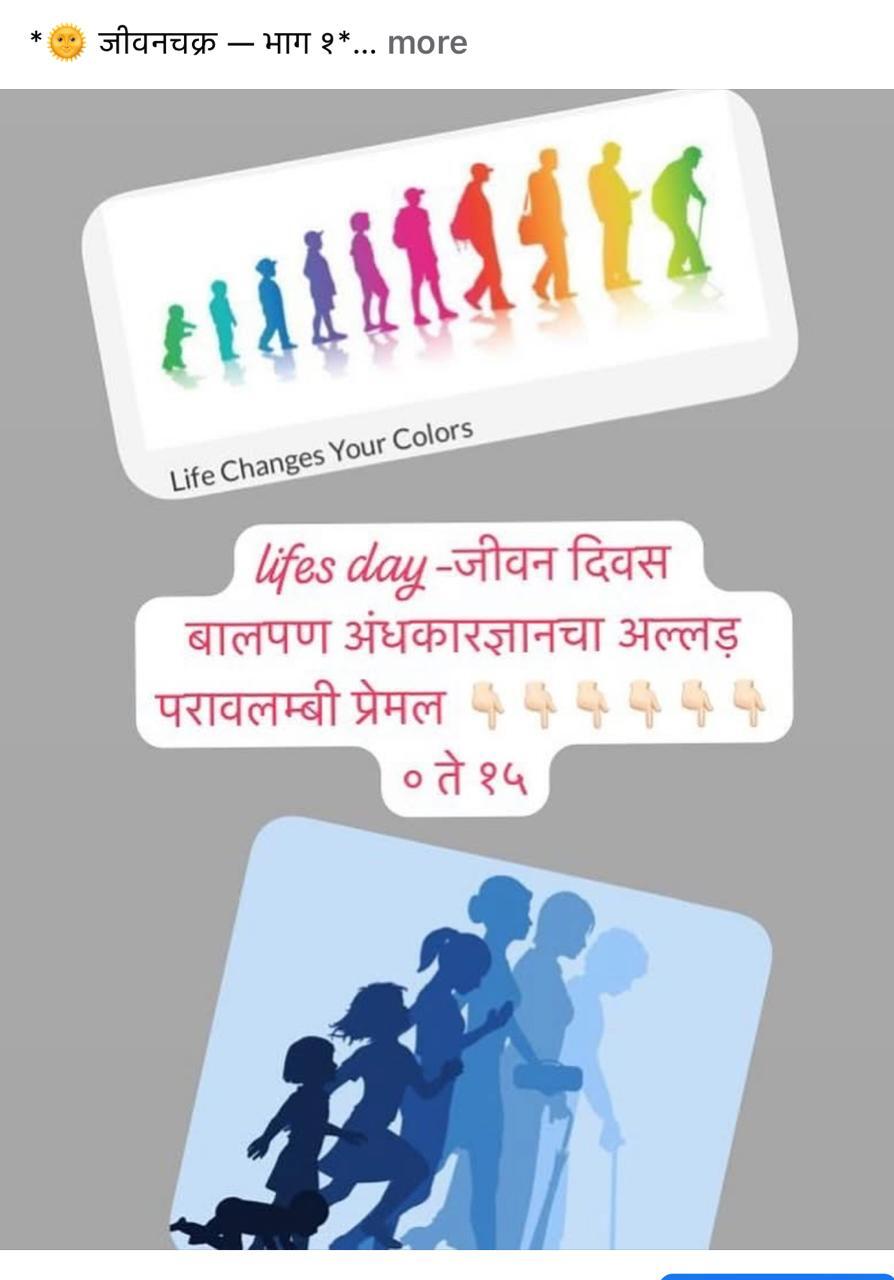
🌞 Life Cycle — (Part 1/3)
🔶 Childhood
Childhood is filled with innocence, playfulness, dependence, and affection.
🔺 At the time of birth
We understand nothing — eyes closed, no words, and no awareness of the world. Yet somehow, we recognize our mother and receive nourishment. All of this happens through nature’s incredible design.
🔺 The first five years
Parents and home are the entire world. Eating, sleeping, and playing — these form the center of life. Everything else feels irrelevant.
🔺 Ages five to ten
At this stage, a basic understanding begins to develop. Children form preferences — favorite foods, places, and people. If something displeases them, they express it immediately through crying or stubbornness — that is their way of coping.
🔺 Between seven and ten years
Children may start showing curiosity toward “negative” or risky things. They feel an urge to test their strength and limits. That’s why they may trouble parents or become curious about potentially dangerous objects like hot stoves, water, lighters, lamps, or even shoes.
🔺 Why does this happen?
Behavior during this stage lays the foundation for personality up to the age of 10–15. A child is naturally loving but does not want stress, pressure, or discomfort. Still, life circumstances and parental influences bring various experiences — sometimes making the child’s health or behavior challenging for parents.
🔺 If a child falls sick, fails, or behaves oddly
Who feels the real pain? Naturally — the parents.
🔺 Ages ten to fifteen
If the environment and upbringing are positive, the child avoids negative influences and the home remains peaceful. But exposure to bad company, neglect of studies, unusual behavior, or health issues can lead to the child absorbing negative influences.
🔺 Energy exchange
At this age, children often interact physically — placing hands on each other’s shoulders, touching heads, hugging, etc. These are described here as forms of “energy exchange,” involving friends, relatives, and classmates.
🔻 To be continued — Part 2 coming soon... 🚩
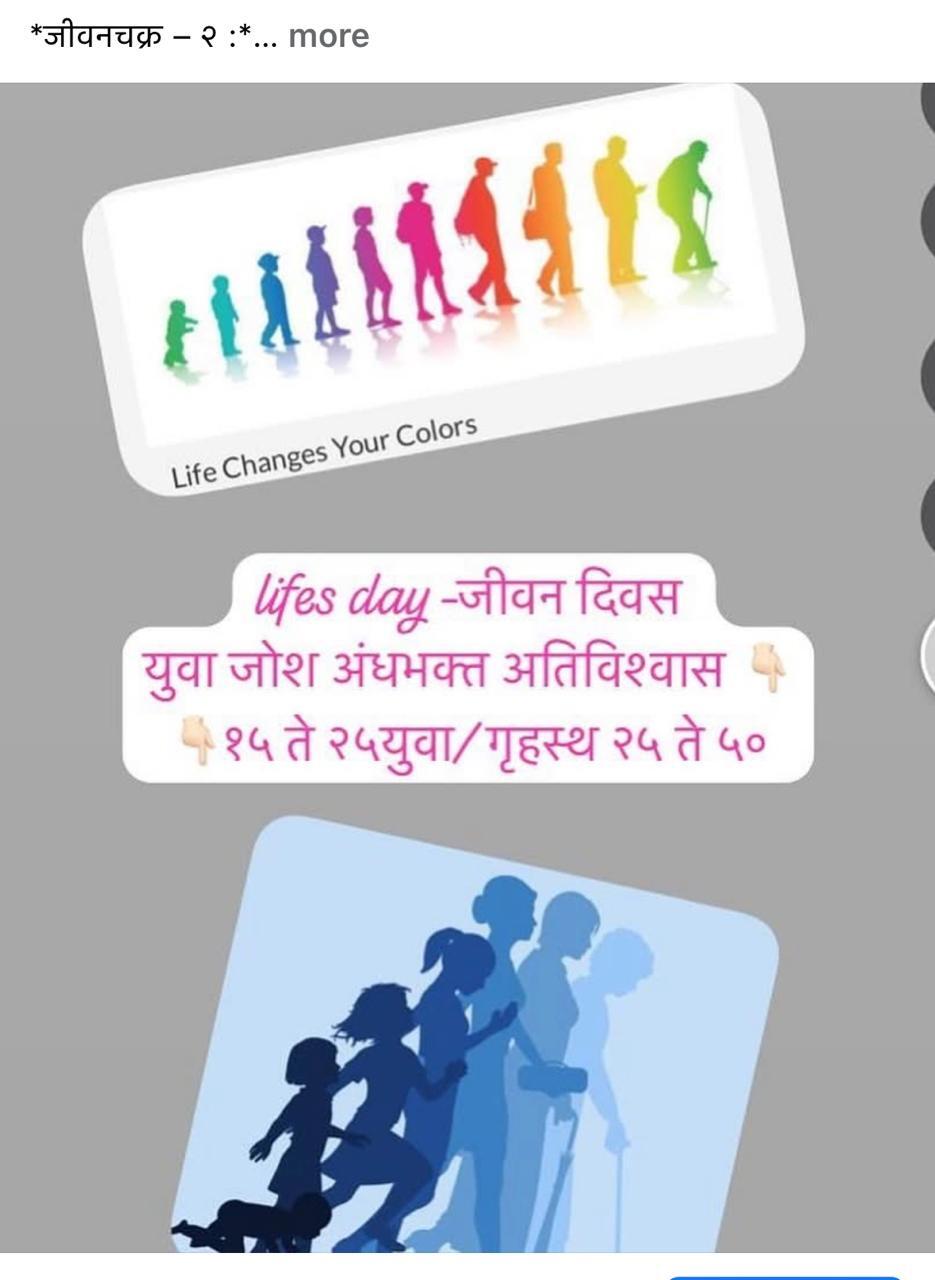
Life Cycle – (Part 2/3)
Youthful energy, blind belief, and overconfidence
🔻🔻🔻🔻🔻
Age 15 to 25 – Youth phase
Age 25 to 50 – Householder phase
🔺🔺🔺🔺🔺
Youthful energy, blind belief, and overconfidence
🔻🔻🔻🔻🔻
Age 15 to 25 – Youth phase
Age 25 to 50 – Householder phase
🔺🔺🔺🔺🔺
Age 15 to 20:
At this age, behavior is often selfish, carefree, and focused on pleasure. Street food, junk food, eating out, and blind friendships become a big part of life. There is a feeling that “nothing is a big deal.” Anyone who speaks nicely feels like a close friend. Mature thinking is usually lacking, and even parents are not given much consideration. Still, parents tolerate mistakes out of love or hope for their child’s future.
At this age, behavior is often selfish, carefree, and focused on pleasure. Street food, junk food, eating out, and blind friendships become a big part of life. There is a feeling that “nothing is a big deal.” Anyone who speaks nicely feels like a close friend. Mature thinking is usually lacking, and even parents are not given much consideration. Still, parents tolerate mistakes out of love or hope for their child’s future.
🔺 Age 20 to 25:
During this phase, romance, attitude, intensity, impulsiveness, and a sense of superiority are strong.
A mindset of “I know everything” develops.
(The behavior during this phase shapes the future; this can be discussed in detail separately.)
During this phase, romance, attitude, intensity, impulsiveness, and a sense of superiority are strong.
A mindset of “I know everything” develops.
(The behavior during this phase shapes the future; this can be discussed in detail separately.)
🔺 Age 25 to 30:
At this stage, indulgence in rich food, enjoyment, and sometimes forgetting family values becomes common. Poor decisions and wrong actions may occur, which can negatively impact the future. There is often little focus on saving money.
At this stage, indulgence in rich food, enjoyment, and sometimes forgetting family values becomes common. Poor decisions and wrong actions may occur, which can negatively impact the future. There is often little focus on saving money.
🔺 Age 30 to 40:
This is when life becomes more serious. Responsibilities increase, and involvement in work and family deepens. Health issues may begin, leading to hospital visits and medications.
If good values and discipline were not developed between ages 10 to 21, challenges may arise—such as financial struggles, workplace issues, conflicts, misunderstandings, and debts.
At this stage, people start understanding the real meaning of life, yet ego often remains. Humility and respect don’t come easily.
This is when life becomes more serious. Responsibilities increase, and involvement in work and family deepens. Health issues may begin, leading to hospital visits and medications.
If good values and discipline were not developed between ages 10 to 21, challenges may arise—such as financial struggles, workplace issues, conflicts, misunderstandings, and debts.
At this stage, people start understanding the real meaning of life, yet ego often remains. Humility and respect don’t come easily.
🔺 Age 40 to 45:
This is the “forties phase,” where energy starts to decline. Physical strength decreases, and effects are seen on eyesight, mental sharpness, and learning ability. That’s why education is ideally completed between 25 and 35. Issues like throat problems, fatigue, and reduced stamina may appear.
This is the “forties phase,” where energy starts to decline. Physical strength decreases, and effects are seen on eyesight, mental sharpness, and learning ability. That’s why education is ideally completed between 25 and 35. Issues like throat problems, fatigue, and reduced stamina may appear.
🔺 Age 45 to 50:
During this time, stomach-related health issues, stress related to children, their education, and concerns about their success or failure become prominent.
There may also be pressure from others and increasing responsibilities within the family. It often feels like there’s no escape from these duties. 🔻
During this time, stomach-related health issues, stress related to children, their education, and concerns about their success or failure become prominent.
There may also be pressure from others and increasing responsibilities within the family. It often feels like there’s no escape from these duties. 🔻
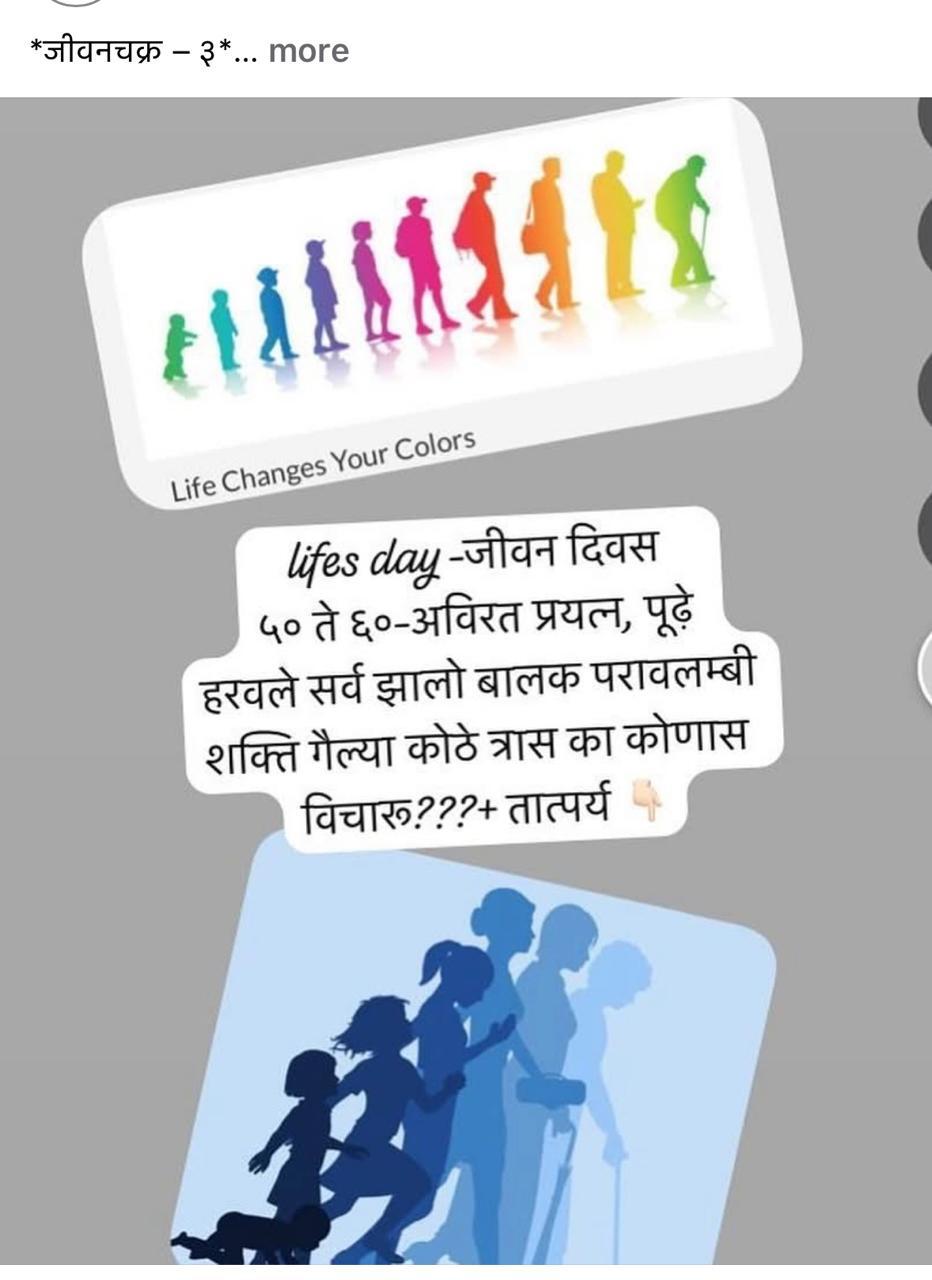
Life Cycle – (Part 3/3)
🔺 Age 50 to 60:
Continuous efforts still go on, but gradually strength starts declining.
The lost energy doesn’t return, and the body begins to depend on others.
Where did all the strength go?
Even when in trouble, you start wondering whom to ask for help…
🔻🔻🔻🔻
Conclusion 👇🏻
🔻 Age 50–60:
Legs, walking ability, and heart—all start “speaking” (showing issues).
The accounting of one’s actions (karma) begins.
Children, consequences of wrong actions, social and mental stress, reduced income and increased expenses.
Luck decreases, and problems connected to children’s fate increase.
🔻 After Age 60:
The strength given by God reduces by nearly 50%.
One begins to live a dependent life.
👇🏻👇🏻👇🏻👇🏻👇🏻
Summary:
🔺 From age 1 to 10 and after 60, we have almost no control over life.
The middle phase (10 to 60)—children, life, money—all change according to one’s karma.
Astrological factors (horoscope strength) can be exceptions.
👍🏻👍🏻👍🏻👍🏻
Further Meaning:
🔺 Why, how, and to what extent good or bad results occur will be explained further.
Because as age increases, we gradually become dependent on others again—like a small child.
👏🏻👏🏻👏🏻👏🏻👏🏻
Detailed Explanation 👇🏻
😛 1. Age 1 to 15:
If the child is on the right path, parents face less trouble, less running around, and maintain better health.
😘 2. Age 15 to 25:
If the child progresses and works hard during this time, parents feel happy.
Otherwise, financial, educational, and mental stress increases.
😔 3. Age 25 to 50:
If the person lives rightly and becomes stable, parents stay happy.
But if actions are wrong, mental stress arises, and even the next generation (children, grandchildren) gets affected.
🥸 4. After Age 50:
Based on one’s own karma, savings, comfort at home, children’s lives, and social respect are determined.
Important Point:
🙏🙏🙏🙏🙏
Age 15 to 25 is the most crucial period.
During this time, the more you invest in:
moral values
self-discipline
proper use of body and mind
gaining knowledge
…the more stable and happy your future life will be.
If you study less and only focus on enjoyment, both salary and life comforts will be limited.
But higher education or paths like civil services (UPSC) or becoming a doctor can lead to a more secure and comfortable life. 😱😱😱